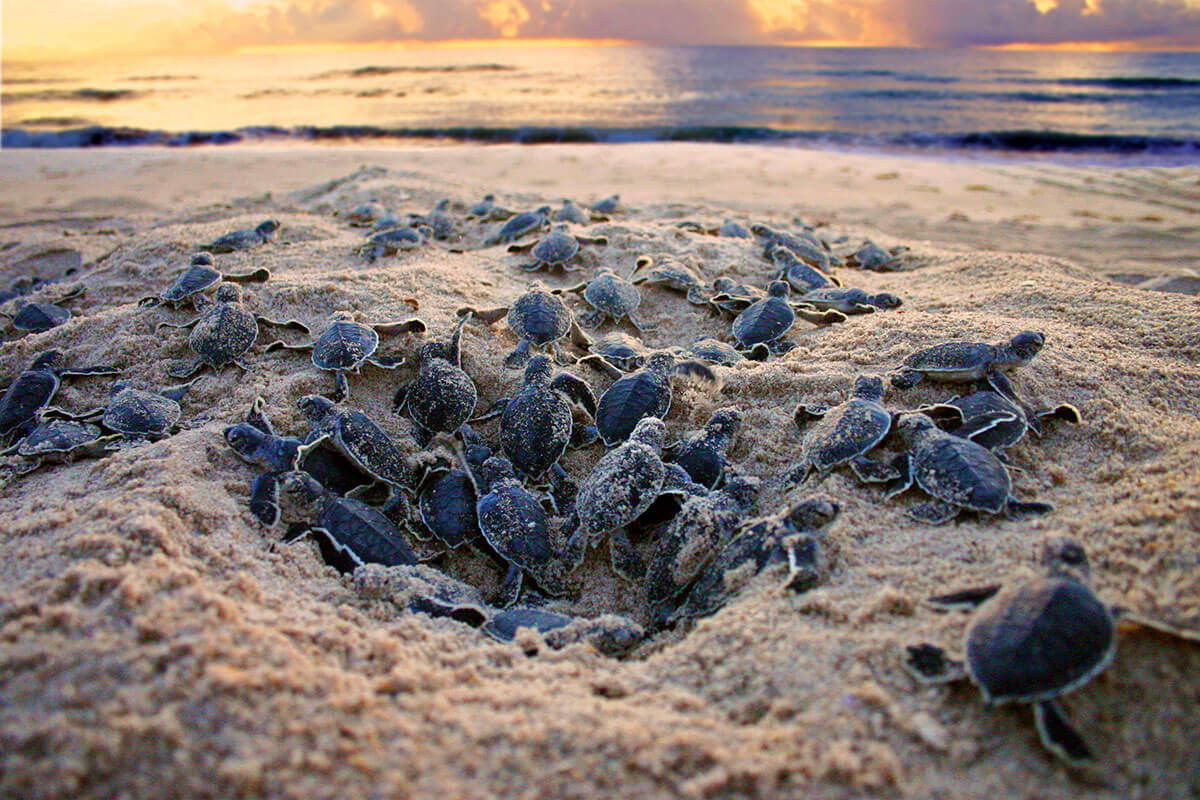
Olive Ridley Turtle Conservation Initiatives
Project Statement
The Olive Turtle Conservation Initiative is a community-oriented conservation programme focused on protecting Olive Ridley turtle nesting habitats, improving hatchling survival, reducing human-induced threats and building local stewardship for coastal ecosystems.
The initiative builds upon Vanashakti's earlier turtle conservation efforts at Morjim, Goa, where conservation interventions focused on monitoring nesting sites, reporting threats, supporting protection of nests and hatchlings, and advocating for measures to minimise disturbance from tourism and other coastal activities.
During 2025–26, the initiative expanded its conservation engagement to Wayangani Village in Sindhudurg, Maharashtra, recognising the importance of protecting turtle nesting habitats beyond a single location. The expanded approach combines field-based conservation with community participation, environmental awareness and education, particularly among students and local communities.
The initiative seeks to create a long-term model in which local communities, students, conservation groups and relevant government authorities work together to safeguard marine turtle nesting beaches and the wider coastal ecosystem.
Project Intervention
Vanashakti undertook a range of conservation and awareness interventions under the Olive Turtle Conservation Initiative.
1. Turtle Nesting Site Monitoring and Protection
Regular field-based monitoring of turtle nesting beaches and identification of potential threats to nesting habitats and hatchlings. Earlier conservation work at Morjim included vigilant monitoring of activities that could adversely affect nesting turtles and their habitat.
2. Protection of Nesting Habitat
The initiative supports measures to minimise disturbance to nesting beaches, nesting areas and hatchling emergence zones. Potential threats such as inappropriate beach activities, artificial lighting, vehicular movement, tourism-related disturbance and other human pressures are identified and reported to the appropriate authorities.
3. Community Engagement
During 2025–26, community engagement was strengthened at Wayangani Village, Sindhudurg, with an emphasis on involving local residents and stakeholders in understanding the ecological importance of turtle nesting beaches and encouraging responsible behavior around nesting habitats.
4. Student Awareness and Environmental Education
Awareness sessions were conducted for students to introduce them to Olive Ridley turtles, their nesting behaviour, threats faced by marine turtles and the importance of conserving beaches and coastal ecosystems. The sessions aimed to encourage students to become environmental ambassadors within their schools, families and communities.
5. Public Awareness and Responsible Coastal Behaviour
The programme promotes awareness among local communities, visitors and other beach users regarding appropriate behaviour around turtle nesting areas, including minimising disturbance, avoiding unnecessary lighting and respecting protected nesting zones.
6. Documentation and Evidence-Based Conservation
Conservation observations, nesting activity and threats are documented to support better understanding of site-specific challenges and facilitate communication with relevant authorities. The initiative also seeks to strengthen location-based conservation planning and monitoring.
7. Collaboration with Stakeholders
Vanashakti works towards greater coordination among local communities, educational institutions, conservation stakeholders and government agencies responsible for forests, wildlife and coastal management.
Project Outcome
The Olive Turtle Conservation Initiative has helped strengthen the focus on protection of turtle nesting habitats, hatchling survival, community participation and environmental education.
Vanashakti's earlier conservation work at Morjim demonstrated measurable conservation activity, with project records documenting 2,496 turtle eggs and 1,960 hatchlings released, with a reported 78.52% survival rate. These records provide an important baseline demonstrating the organisation's experience in turtle conservation and hatchling protection.
With the expansion of the initiative to Wayangani Village, Sindhudurg, during 2025–26, the programme has broadened its geographical scope and adopted a stronger community-based approach. Community engagement activities and student awareness sessions have increased understanding of marine turtle conservation and the ecological significance of nesting beaches.
The initiative has also contributed to:
- Increased awareness of Olive Ridley turtle nesting and conservation requirements.
- Greater community involvement in protecting sensitive coastal habitats.
- Improved environmental awareness among students and young people.
- Identification and reporting of activities that may threaten nesting turtles and their habitats.
- Promotion of responsible behaviour around turtle nesting beaches.
- Strengthened dialogue between conservation stakeholders and local communities.
- Development of a foundation for continued monitoring and location-specific conservation interventions in Sindhudurg and other coastal areas.
The initiative aims to move from site-specific turtle protection to a wider, community-supported coastal conservation model, where local knowledge, scientific monitoring, environmental education and stakeholder participation collectively contribute to the long-term protection of Olive Ridley turtles and their nesting habitats.